
Stop Losing Money: The Dropshipping SEO Strategy That Wins
- October 15, 2025
- Marketing tips
Estimated reading time: 21 minutes
Key Takeaways
- Many dropshipping stores overlook SEO, but it’s one of the most powerful strategies for long-term growth.
- Technical SEO, keyword research, content creation, and backlinking are all essential for e-commerce SEO success.
- A structured content calendar and regular optimization is crucial for sustainable growth.
- Balance on-page and off-page SEO by optimizing product descriptions and building authoritative backlinks.
Table of Contents
- What is SEO and Why It's Crucial for Your Dropshipping Business?
- The Foundation of SEO for Dropshipping Stores
- Technical SEO for Dropshipping Stores
- Off-Page SEO and Backlinking Strategies
- Keyword Research Basics
- On-Page SEO: Optimizing Your Website
- Creating High-Quality Content
- Building a Content Strategy
- Local SEO for Global Dropshipping Stores
- Monitoring and Improving Your SEO Strategy
- Final Thoughts
- FAQ
What is SEO and Why It's Crucial for Your Dropshipping Business?
SEO, or Search Engine Optimization, is the art and science of making your website more visible on search engines like Google. In simpler terms, it's about getting your store to appear higher in search results when potential customers are looking for products or information online. For dropshipping, this is invaluable because it attracts free organic traffic—visitors who discover your site without you spending a dime on ads.
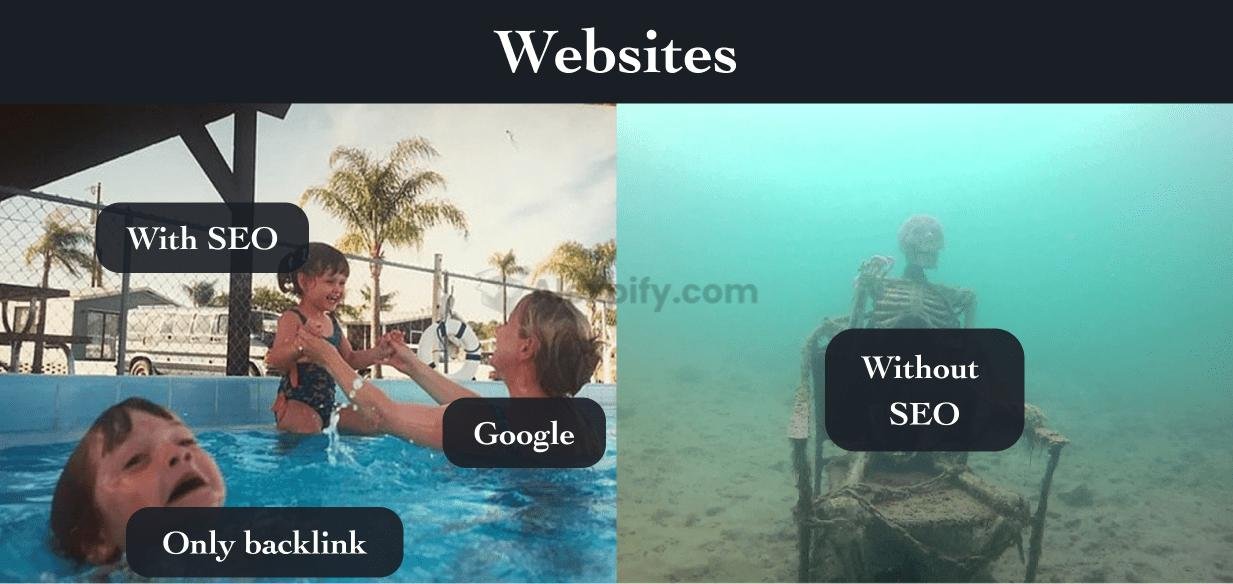
The better your SEO, the more frequently your store will show up in searches for the products you sell. This increased visibility isn't just about traffic; it's about securing sales and building a successful business. In a highly competitive dropshipping landscape, an effective SEO strategy can give you a significant, lasting advantage.
The Foundation of SEO for Dropshipping Stores
A robust e-commerce SEO strategy begins with a few fundamental concepts. These are the building blocks that will significantly increase your store's visibility on search engines.
Technical SEO for Dropshipping Stores
While compelling content and strong backlinks are vital, the technical health of your website forms the backbone of your SEO. Technical SEO ensures that search engines can easily crawl, index, and understand your site, that it loads quickly, and that it provides a seamless user experience.
Why Technical SEO Matters
Search engines employ "crawlers" to scan and index your site's content. If your website isn't technically optimized, these crawlers can struggle to comprehend or index your site, directly impacting your search rankings. For example, if your store sells tech gadgets and your site takes too long to load, search engines may penalize you in rankings. A competitor with a faster site speed might outrank you, even if their content is similar.
Key Technical SEO Factors
- Mobile-Friendliness: In our mobile-first world, your store must perform well on smartphones and tablets. Google's mobile-first indexing primarily considers the mobile version of your site for ranking purposes. A mobile-friendly site, easy to navigate, will reduce bounce rates and increase conversions, as more customers shop from their phones.
- Site Speed: Page speed is a critical ranking factor. A slow-loading website will likely see visitors leave before they even view your products, and search engines will penalize your site accordingly. I've seen stores lose significant sales simply because product pages took too long to load.
- SSL Certificates: An SSL certificate encrypts data between your site and its users. Google considers SSL a ranking factor, and it's absolutely essential for any e-commerce site. A URL starting with
https://signals security to both customers and search engines, enhancing trust and SEO. - Fixing Broken Links and 404 Errors: Broken links and 404 errors (pages that no longer exist) frustrate visitors and harm your SEO. Regularly check your site for these issues and resolve them to maintain a positive user experience. A customer encountering a 404 error signals to search engines that your site might not be properly maintained.
SEO-Friendly URL Structures
Clean, descriptive URLs are beneficial for both users and search engines. SEO-friendly URLs are easy to read, incorporate relevant keywords, and clearly describe the page's content. For instance, www.yourstore.com/products/minimalist-wooden-chair is far more effective than www.yourstore.com/productid=12345. A clear, keyword-rich URL has a better chance of ranking well and being understood by both.
Off-Page SEO and Backlinking Strategies
While on-page SEO focuses on optimizing elements within your website, off-page SEO encompasses activities that occur outside your site but still influence its ranking. The most impactful aspect of off-page SEO is backlinking—securing links from other websites back to your store.
What is Off-Page SEO?
Off-page SEO involves actions external to your website that bolster its authority and ranking. While search engines utilize numerous factors to determine rankings, backlinks play a monumental role in signaling your site's credibility. If you run a store selling eco-friendly products, for example, a link from a popular environmental blog to your "Eco-friendly water bottles" page not only drives traffic but also significantly boosts your authority with search engines.
Why Off-Page SEO is Critical for Dropshipping Stores
For a dropshipping store, acquiring backlinks can be a transformative force. It not only directs more traffic to your site but also cultivates trust. Customers are more inclined to purchase from a store discovered through a credible source or website. When your store gains more authority, Google is more likely to showcase your products to users searching for related items.
Building Backlinks: What You Need to Know
Backlinks are links from one website to another. If a fitness blog links to your store's yoga mats, that's a backlink. Search engines interpret backlinks as "votes" of confidence, which can elevate your store's ranking. Imagine owning a gardening supplies store; if a well-known gardening blog features your "Best pruning tools for beginners" page, this backlink signals to Google that your site offers valuable content, leading to higher search results.
Here are some effective strategies for building backlinks:
- Guest Posting: This is a popular method. Reach out to reputable blogs or websites in your niche and offer to write valuable content in exchange for a link back to your store. For instance, if you sell eco-friendly cleaning products, you could write a guest post for a sustainability blog titled "Top 5 natural cleaning solutions for a greener home," including a backlink to your store's product page.
- Influencer Collaborations: Partnering with influencers is another route to earn backlinks. Many influencers maintain blogs where they review products. Send them your products for review and request a backlink in return. If you sell outdoor gear, collaborating with a travel influencer who blogs about camping and hiking could result in them reviewing your tents and linking back to your store.
- Broken Link Building: This is an advanced but highly effective tactic. Identify broken links on websites within your niche, contact the site owner, and propose your content as a replacement. If a popular health blog has a broken link for "affordable yoga mats," you could reach out and offer to replace it with a link to your store's eco-friendly yoga mat product page.
Leveraging Social Media for SEO
While social media links don't directly impact SEO rankings, they are crucial for off-page SEO by driving traffic and engagement to your site. Social media can significantly build brand awareness, which can, in turn, lead to more backlinks from other sites. For example, if you actively share images and links to your "Scandinavian Furniture for Small Apartments" products on Pinterest, users may pin your images, generating more traffic and potentially backlinks when other blogs mention your products.
Keyword Research Basics
Keywords are the words and phrases people type into search engines when looking for something specific. If someone wants fitness leggings, they might search for "best women's fitness leggings" or "affordable workout leggings." These are keywords.
In dropshipping, where many products are available from multiple stores, competition is fierce. Using the right keywords helps potential customers find your store over a competitor's. Effective keyword research allows you to uncover the precise terms your customers are searching for and then optimize your product pages and content to include those terms.
Instead of targeting a broad term like "vintage furniture," I advise focusing on more specific, long-tail keywords such as "affordable vintage coffee tables" or "handcrafted vintage coffee tables." These often have lower competition and attract more targeted traffic.
Tools I recommend for keyword research:
- Google Keyword Planner (free): Excellent for finding keywords related to your products and gauging search volume.
- Ubersuggest (free and paid): A user-friendly tool offering keyword ideas, search volumes, and difficulty scores.
- Ahrefs or SEMrush (paid): Advanced tools for in-depth keyword research, competitor analysis, and comprehensive e-commerce SEO insights.
To find profitable, low-competition keywords, aim for a balance between popularity (high search volume) and competition (how many other sites rank for the same term). My tips:
- Think like your customers: What terms would they use when searching for your products?
- Look for long-tail keywords: These are longer, more specific phrases like "best eco-friendly fitness leggings" rather than just "fitness leggings." Long-tail keywords typically have less competition, making them easier to rank for. If you sell pet supplies, instead of "dog beds," consider "orthopedic dog beds for large breeds" or "waterproof dog beds for outdoor use." These specific terms attract customers seeking exactly what you offer.
On-Page SEO: Optimizing Your Website
Once you've identified your keywords, the next step is optimizing your store's pages—this is on-page SEO. It involves ensuring that both search engines and customers can quickly understand what your website is about.
What is On-Page SEO?
On-page SEO encompasses all elements you directly control on your website to improve your rankings. This includes optimizing product titles, descriptions, and images, along with using the right tags and internal links to make your pages SEO-friendly.
How to Optimize Product Titles and Descriptions
Your product titles and descriptions are among the first elements search engines and potential customers see. Including your target keywords here helps Google understand your page's content, making it easier for customers to find your products.
- Product titles: Use clear, descriptive titles that incorporate your main keyword. Instead of a generic "Desk Lamp," use "Modern LED Desk Lamp – Adjustable & Energy Efficient." This includes relevant keywords while highlighting key features.
- Product descriptions: Write unique, detailed descriptions for each product, naturally weaving in your primary and secondary keywords. Focus on the product's benefits and features, but avoid keyword stuffing. If you're selling a "fitness tracker watch," your description could emphasize keywords like "waterproof fitness tracker for swimming" and highlight features like heart rate monitoring, battery life, and smartphone syncing.
The Importance of Meta Tags (Title Tags, Meta Descriptions)
Meta tags are HTML elements that assist search engines in understanding your page content.
- Title tags: This is the title that appears in search engine results. Aim for around 60 characters and include your primary keyword.
- Meta descriptions: This is the brief description displayed beneath the title in search results. While it doesn't directly influence rankings, a well-crafted meta description can entice users to click your link. Keep it between 150-160 characters and include your main keyword. For kitchen gadgets, a meta description for a "multi-functional blender" could be: "High-performance multi-functional blender with 5-speed settings for smoothies, soups, and sauces. Free shipping available."
How to Structure Headings (H1, H2, H3) Properly
Headings (H1, H2, H3) organize your content, making it easier for both users and search engines to understand the page's structure.
- H1: This is the main heading of your page, typically your product name or blog post title. It should contain your primary keyword.
- H2/H3: These are subheadings that divide your content into sections. Use them to organize product details or different parts of a blog post, including related keywords where appropriate.
Internal Linking
Internal linking involves linking from one page on your website to another. This helps search engines understand the hierarchy and relationships between pages, and it encourages visitors to stay on your site longer. If you sell yoga equipment, link a blog post about "The benefits of yoga for beginners" to a product page featuring yoga mats and props.
Optimizing Images
Images are crucial for dropshipping stores, but they also need SEO optimization.
- Alt text: Add descriptive alt text to each image, using relevant keywords. This helps search engines understand the image and improves accessibility for visually impaired users.
- Image size: Compress images to reduce file size without sacrificing quality. Faster-loading pages enhance both user experience and search rankings. For instance, optimize a product page for "Fitness Resistance Bands." Your product title could be "Fitness Resistance Bands Set – Non-Slip & Durable Workout Bands for Home Exercise." The description would naturally incorporate keywords like "resistance bands for home workouts," focusing on unique benefits. The meta tag could be "Fitness Resistance Bands Set – Non-Slip Workout Bands." Internal links could point to a blog post like "Best home workouts with resistance bands." Images should be compressed with alt text such as "fitness resistance bands for home gym."
Creating High-Quality Content
The adage "content is king" holds especially true in the realm of SEO. Content marketing is a potent tool for improving your SEO, enabling you to connect with customers, answer their questions, and appear in search results when they're seeking solutions.
Why Content Marketing is Key for SEO
Content marketing involves creating and sharing valuable content—such as blog posts, guides, product reviews, or videos—to attract and engage your target audience. This content not only fosters relationships with potential customers but also boosts your SEO by giving search engines more reasons to rank your site. If you sell camping gear, a blog post titled "Top 10 essential camping gear for beginners" assists customers while also providing an opportunity to rank for keywords like "best camping gear" or "camping essentials."
Search engines prioritize fresh, relevant, and helpful content. The more quality content you produce, the more opportunities you have to rank for various e-commerce SEO keywords. Furthermore, by creating valuable content, you establish your store as an authority in your niche, which can lead to more backlinks and social shares—two critical components for off-page SEO.
Why Blogs, How-To Guides, and Product Reviews are Important for Your Store’s Visibility
One of the easiest ways to improve your store's SEO is by maintaining a blog. Regularly posting useful articles, how-to guides, or product reviews can help you:
- Target a wider range of keywords: Each blog post presents an opportunity to rank for different keywords that might not fit directly into your product pages.
- Answer customer questions: Many individuals turn to Google for answers before making a purchase. By writing helpful articles (e.g., "How to choose the best yoga mat for beginners"), you can draw these potential customers to your site.
- Build trust: Informative, helpful content makes potential customers more likely to buy from you because they perceive you as an expert in your niche. If you sell skincare products, a blog post titled "How to choose the best organic moisturizer for sensitive skin" can attract people searching for organic skincare solutions.
Tips for Writing SEO-Friendly Blog Posts
Crafting content that is both useful for readers and optimized for search engines might seem daunting, but it doesn't have to be. Here are some simple e-commerce SEO tips for writing effective blog posts:
- Choose a focus keyword: Each blog post should target one main keyword. For a guide about yoga mats, your keyword might be "best yoga mats for beginners."
- Use keywords naturally: Include your focus keyword in the title, headings, and throughout the text—but avoid overdoing it. Write naturally and steer clear of "keyword stuffing" (using the keyword too many times).
- Optimize for readability: Break your content into short paragraphs, use bullet points or lists when appropriate, and ensure your writing is easy to follow. Clear, readable content keeps visitors on your page longer, which improves your SEO.
- Include internal links: Link to other relevant pages or blog posts on your website. For example, if you're writing about yoga mats, link to a related blog post on "Best home workouts using a yoga mat" or to your product page for yoga mats.
- Add images or videos: Visual content makes your posts more engaging. Always include descriptive alt text for any images to aid SEO.
The Role of Product-Focused Content (e.g., Reviews, Comparisons) for Dropshipping
In dropshipping, product-focused content is incredibly valuable for attracting the right audience. Consider writing:
- Product reviews: Honest, detailed reviews of the products you sell. These not only assist customers in making informed decisions but also provide an opportunity to rank for keywords like "[product name] review."
- Product comparisons: Compare different products you offer or pit them against competitors (e.g., "Best fitness bands for home workouts: a comparison"). People appreciate side-by-side comparisons before making a purchase.
- How-to guides: Explain how to use the products you sell. If you sell fitness gear, write a post on "5 effective home workouts using resistance bands."
Building a Content Strategy
Randomly creating content isn't enough. You need a structured strategy to ensure consistent production of valuable content that enhances your SEO and engages your audience. Let's explore how to build an effective e-commerce SEO strategy for your dropshipping store.
How to Plan a Content Calendar for Your Dropshipping Store
A content calendar is a schedule that outlines what content you will create and when you will publish it. This helps you stay organized and ensures you're regularly producing new content to keep your site fresh. Here's how to create one:
- Start with keyword research: Use the keyword research tools we discussed earlier to identify topics your customers are searching for. If you sell fitness gear, you might discover people are searching for "best home workout equipment."
- List content ideas: Based on your keywords, brainstorm a list of blog post topics. Aim for a mix of educational posts, product-focused content, and seasonal content (like gift guides during the holiday season).
- Assign dates: Once you have your content ideas, assign publication dates for each. Ensure you spread your posts evenly (e.g., one or two per week).
- Track performance: After publishing, monitor how each post performs using tools like Google Analytics. This will help you identify which content drives traffic and sales, allowing you to adjust your strategy over time.
What Type of Content to Create for Each Stage of the Customer Journey
Your customers exist at different stages of their buying journey. Some are browsing, while others are ready to purchase. Creating content that targets each stage can guide potential customers from discovery to purchase.
- Awareness stage: At this point, potential customers are just realizing a problem or need (e.g., "How do I start working out at home?"). Blog posts and how-to guides providing general information are excellent for capturing attention here.
- Consideration stage: Now, customers are weighing their options (e.g., "What equipment do I need for home workouts?"). Product reviews, comparisons, and detailed guides are beneficial at this stage.
- Decision stage: At this juncture, customers are ready to make a purchase. Optimized product pages with clear descriptions, benefits, and testimonials work best. You can also create content like "Why [Product Name] is the best choice for home workouts" to push them towards a decision.
For example, a content strategy for an AliDropship fashion store might look like this:
- Week 1: Blog post – "Top 5 fashion trends for fall 2024" (targeting "fall fashion trends" keyword).
- Week 2: Blog post – "How to style a statement jacket for every occasion" (targeting "how to style a statement jacket").
- Week 3: Product review – "Why our oversized sweater is the coziest choice for winter" (targeting "oversized sweater review").
- Week 4: Comparison post – "Best jackets for winter: comparing our top 3 picks" (targeting "best winter jackets").
This strategy allows you to target a range of keywords, maintain an active blog, and provide value to potential customers at every stage of their journey.
In this section, we explored how to create high-quality content that not only engages your audience but also enhances your SEO. By writing SEO-friendly blog posts, building a content calendar, and targeting different stages of the customer journey, you can drive more traffic to your store and convert visitors into customers.
Local SEO for Global Dropshipping Stores
Even if your dropshipping store caters to a global audience, local SEO can still be advantageous, especially if you're targeting specific countries or regions.
What is Local SEO?
Local SEO focuses on optimizing your website to rank higher for location-based searches. If your AliDropship store specializes in eco-friendly products for customers in Australia, you might optimize your content for keywords like "sustainable products in Australia" or "eco-friendly home décor in Sydney."
Setting Up Google My Business
If you have a physical presence or intend to target a particular region, Google My Business is a powerful tool. For instance, if you run an AliDropship store for handmade jewelry and occasionally sell at local markets, setting up a Google My Business profile can help local customers find you when they search for "handmade jewelry near me."
Monitoring and Improving Your SEO Strategy
SEO is a long-term process requiring continuous monitoring and adjustments. Here, we'll examine how to track your SEO progress and implement data-driven improvements.
Tracking Your SEO Progress
To understand the effectiveness of your SEO efforts, tracking key metrics is essential. Here are some valuable tools:
- Google Analytics: Tracks website traffic, bounce rates, traffic sources, and more.
- Google Search Console: Provides data on your site's performance in Google search results, including keywords driving traffic. If Google Analytics reveals that a product page, such as "Recycled Cotton Tote Bags," is generating significant traffic but has a high bounce rate, it might indicate that the page requires optimization.
Making Data-Driven SEO Adjustments
SEO is an ongoing process, and the data you collect should guide your adjustments. If a particular blog post or product page isn't performing well, consider these steps:
- A/B testing: Experiment with different headlines, meta descriptions, or product descriptions to see which version performs better. If you sell skincare products and the product page for "Organic Face Serum" isn't converting well, you could A/B test headlines like "Best Organic Face Serum for Sensitive Skin" versus "Hydrating Organic Face Serum."
- Content updates: Refresh older blog posts with new information and more relevant keywords to keep them current. If you wrote a post a year ago titled "Top Fitness Gadgets for 2023," update it to "Top Fitness Gadgets for 2024," including any new gadgets or trends.
Final Thoughts
SEO may appear complex, but it's an indispensable component of growing your dropshipping store. From keyword research and content creation to backlinks and technical SEO, each aspect contributes to driving more traffic to your site and helping you stand out in the competition. Remember, SEO is a long-term strategy. With consistent effort, you can establish a strong online presence that will generate free, organic traffic for years to come. Begin with the basics, track your progress, and continue making improvements to achieve sustained growth.
FAQ
What is SEO, and why is it important for my dropshipping store?
SEO (Search Engine Optimization) is the process of improving your website's visibility on search engines like Google. By optimizing your site, you increase the likelihood of appearing higher in search results, leading to more organic (free) traffic, potential customers, and ultimately more sales. For e-commerce, especially dropshipping, SEO is vital for standing out in a competitive market without solely relying on paid advertising.
How do I choose the right keywords for my store?
Choosing the right keywords involves thorough research to understand what your potential customers are searching for. Utilize tools like Google Keyword Planner or Ubersuggest to find keywords with a good balance of search volume and low competition. Focus on long-tail keywords—specific phrases like "non-slip yoga mats for beginners" instead of just "yoga mats"—to capture targeted traffic.
How can I improve the SEO of my product pages?
To enhance your product page SEO, start by optimizing titles and descriptions with relevant keywords. Ensure you use descriptive meta tags (title and meta description), include high-quality images with keyword-optimized alt text, structure content with headings (H1, H2, H3) and internal links, and confirm the page loads quickly and is mobile-friendly.
What is on-page SEO and off-page SEO?
On-page SEO refers to all optimizations performed directly on your website, such as keyword usage, creating SEO-friendly content, and optimizing product pages. Off-page SEO encompasses actions taken outside your website, like building backlinks from other sites and promoting your store through social media. Off-page SEO helps build your store's credibility and domain authority.
How long does it take to see results from SEO?
SEO is a long-term strategy, and it typically takes several months to observe significant results. While some changes, like improving website speed or fixing technical issues, might have an immediate impact, achieving better rankings and more organic traffic from search engines can take 3 to 6 months or even longer, depending on your niche's competitiveness and chosen keywords.
What are backlinks, and how do I get them for my dropshipping store?
Backlinks are links from other websites that point to your site. They act as "votes of confidence" and signal to search engines that your site is trustworthy. To acquire backlinks, you can: write guest posts for other blogs in your niche, collaborate with influencers to review your products and link back to your store, submit your site to relevant online directories, or reach out to websites with broken links and offer your content as a replacement.
Why is site speed important for SEO?
Site speed is a critical ranking factor for search engines. A slow-loading site can lead to a poor user experience, causing visitors to leave your site (bounce) before they even see your products. Fast websites not only rank better but also contribute to higher conversions because users are more likely to remain on your site and make a purchase.
Do I need to focus on local SEO if I have a global dropshipping store?
Local SEO can still be beneficial, even for a global dropshipping store. If you target customers in specific regions or offer products popular in particular countries, optimizing for local searches can attract more region-specific traffic. Setting up a Google My Business profile can help you be discovered in local search results.
What are some common mistakes to avoid when doing SEO for my e-commerce store?
Some common SEO mistakes include: keyword stuffing (overloading pages with keywords, which can harm user experience and lead to search engine penalties); ignoring mobile optimization (your site needs to be optimized for smartphones and tablets due to mobile-first indexing); slow site speed (not optimizing for speed leads to higher bounce rates and lower rankings); not updating content (outdated or irrelevant content can hurt rankings, regular updates are key); and poor internal linking (failing to connect relevant pages internally can reduce user time on site and negatively affect SEO).

About us and this blog
Alexpify is a knowledge hub for entrepreneurs who want to master Shopify dropshipping and global e-commerce. Founded by Alex, the blog shares practical guides, real insights, and step-by-step tutorials that simplify online business for everyone — from beginners to full-time digital sellers.

More from my blog
See all posts